
INTRODUCTION
Rubber Processing Analyzer RPA2025
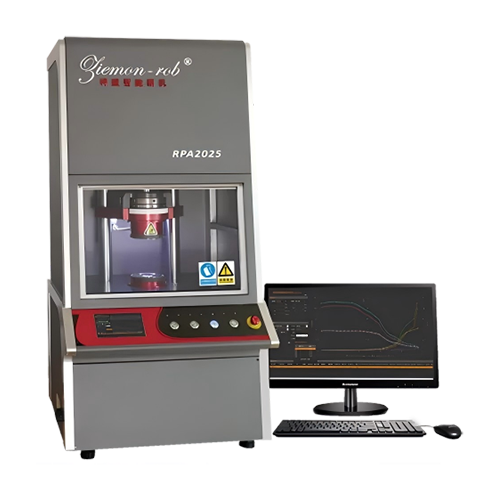
Rubber Processing Analyzer RPA2025 is a comprehensive testing instrument for rubber materials that integrates raw rubber testing, processing property (viscoelastic or rheological property) testing of compounded rubber, curing property testing, and dynamic physical property testing of vulcanized rubber. By employing a wide range of variations in cavity oscillation frequency, shear strain and test temperature, it can measure rubber properties in a single run through preset series combinations of sub-tests.
The test methods of the RPA2025 Rubber Process Analyzer comply with international standards such as ASTM D5289, D6204, D6601 and D8059. Materials to be tested include raw rubber, unvulcanized rubber, compounded rubber, vulcanizable rubber and other thermosetting materials. Equipped with Ziemen special software and a computer, it facilitates data analysis and export.
The measurement and analysis of dynamic properties of rubber materials have been increasingly widely used in tires, seals, rubber products industry, raw material industry, petrochemical industry, military industry, scientific research institutes and other fields, supporting research and applications in polymer material formulation research, new material development, production process control, and replacement of traditional testing equipment.
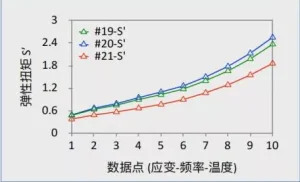
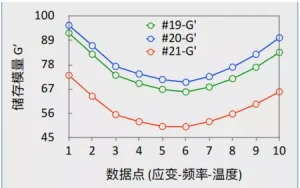
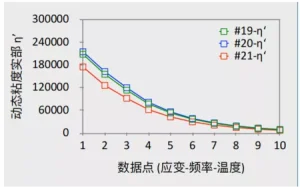
The rubber sample is placed in a closed double-cone cavity at a set temperature. The cavity consists of an upper mold and a lower mold.The lower mold is driven to oscillate reciprocally by a direct-drive servo motor system, whose oscillation frequency or angular arc can be continuously varied within a preset range. This is equivalent to applying sinusoidal strain of different frequencies and/or different amplitudes to the sample.A torque sensor installed on the upper mold detects the response of the sample to the sinusoidal strain, measuring the viscoelastic properties, curing characteristics, and physical properties after vulcanization of the rubber sample at different temperatures, different oscillation frequencies, and/or different shear strains.
1. Drive System
- Direct-drive servo motor rigidly connected to lower mold cavity, eliminating cumulative errors, deformation and wear from conventional drive parts; ensures high precision of oscillation frequency and shear strain
- Data repeatability difference coefficient ≤ 3%
- Independent high-strength wear-resistant bearings, long service life, easy disassembly and low maintenance cost
- Oscillation frequency: 0.05Hz – 50Hz (continuously adjustable)
- Shear strain: ±0.28% – ±1256% (oscillation arc: ±0.02° – ±90°, continuously adjustable)
2. Mold Cavity System
- Rotor-free pressurized closed biconical cavity, compliant with ASTM standards
- Direct heating and air-blast cooling for upper and lower molds, precise temperature control
3. Temperature Control System
- DC heating + PID temperature control, equipped with high-grade 4-wire platinum resistance sensor
- Heating rate: ≥1ºC/s; Cooling rate: ≥0.6ºC/s
- Temperature control accuracy: ±0.2ºC
- Temperature recovery time: <30s; Overshoot: <0.3ºC
4. Torque Measurement System
- High-precision torque sensor, accuracy: ±0.01dNm
- High sensitivity to detect subtle changes in polymer materials
5. Real-time Monitoring System
- 7-inch color LCD display
- Real-time monitoring of test process, data and equipment status (temperature, torque, frequency, fault alarm, etc.)
6. Torque Calibration
- Compression-type torque calibrator, quick and easy calibration without complicated installation
7. System Software
- Self-developed Zimeng RPA dedicated software, user-friendly HMI
- Real-time data and curve display, standard setting, optional barcode input
- Supports centralized data management, storage and transmission
8. Test Items & Parameters
| Item | Parameter | Unit |
|---|---|---|
| Torque | Complex Torque (S*), Elastic Torque (S’), Viscous Torque (S”) | dNm |
| Shear Modulus | Complex Modulus (G*), Storage Modulus (G’), Loss Modulus (G”) | KPa |
| Hysteresis Loss | tanDelta | – |
| Dynamic Viscosity | Complex Dynamic Viscosity (ŋ*), Dynamic Viscosity (ŋ’) | Pa.s |
| Pressure (Optional) | Elastic Torque (S’), Pressure (P) | – |
9. Test Modes
- Curing Test: Test curing properties under isothermal vulcanization conditions
- Time/Preheating: Sample conditioning or static curing without data output
- Temperature Ramping Analysis: Analyze curing behavior under linear temperature change
- Frequency Sweep: Test dynamic viscoelastic properties via frequency variation
- Strain Sweep: Test dynamic viscoelastic properties via strain variation
- Temperature Sweep: Test material properties within preset temperature range
- Combined Test: Comprehensive test with variable temperature, frequency and strain
- Stress Relaxation: Test stress relaxation decay of rubber compounds
- Aging Test: Evaluate property changes before and after aging
Analyze the viscoelastic properties (i.e., processability) of raw materials and compounded rubber, and investigate the influence of fillers on rubber properties.
Measure torque, hysteresis loss, modulus and dynamic viscosity of rubber compounds at different shear rates through frequency sweep and strain sweep tests, revealing in depth the effects of flow behavior, dynamic processability, die swell, shear thinning behavior, Payne effect and other characteristics during rubber mixing, internal mixing, extrusion, calendering, injection molding and other processes.
Simulate actual production conditions of vulcanized rubber through user-defined static vulcanization or vulcanization tests under linear temperature ramp conditions.
Evaluate the properties of vulcanized rubber through frequency sweep or strain sweep tests.
| Item | Details |
|---|---|
| International Standards | ASTM D5289, D6204, D6601, D8059, etc. |
| Test Cavity | Biconical cavity, clamping force ≥ 11.5 kN, pressurized sealingCavity gap: 0.45 ± 0.05 mm (fine adjustable) |
| Torque Measurement | Torque sensor, 0.01 ~ 200.00 dNm (accuracy: 0.5% of reading)Resolution: 0.01 dNm |
| Oscillation Amplitude | ±0.02° ~ ±90.00° (Strain: ±0.28% ~ ±1256%) |
| Drive System | Direct servo drive |
| Sample Volume | Approx. 4.5 cm³ |
| Temperature Control | DC heating, ambient temperature ~ 230 °C ± 0.3 °CResolution: ±0.01 °CTemperature recovery time ≤ 30 s |
| Temperature Detection | PID control, 4-wire PT100 platinum resistance |
| Units of Measurement | Torque: dNm, in-lb, kg‑cmShear modulus: Pa, dynes/cm², psiDynamic viscosity: Pa·sTemperature: °C, °FPressure: bar, kg/cm³ (optional)Time: min, min/secFrequency: Hz, cpmShear rate: 1/s, rad/s |
| Sub-test Modes | Cure test, preheating, frequency sweep, strain sweep, temperature sweep, temperature-ramp curing, etc. |
| Air & Power Requirements | Clean compressed air, pressure ≥ 0.6 MPaGood earthing, single‑phase 220–230 V ±5%, 10 A |